Spotting a copycat YouTube channel before it outranks you on search is one of the most urgent — and most overlooked — challenges for independent creators in 2026. By the time a duplicate channel appears in your analytics as a traffic drain, it has often already accumulated views, backlinks, and watch-time signals that make it genuinely competitive. Understanding the early warning patterns, and using AI-assisted analysis to surface them quickly, is the difference between acting early and dealing with months of compounding damage.
Why Copycat Channels Gain Search Ground So Quickly
YouTube's search and recommendation algorithm rewards consistency, watch time, and engagement — not originality. A channel that systematically repackages your titles, mirrors your descriptions, and re-voices your narration can accumulate ranking signals faster than you might expect, particularly if it publishes at high volume. By the time the similarity is obvious to a human reviewer, the competing channel may already be appearing alongside — or above — your own uploads for the exact keyword phrases you spent months building authority around.
The mechanics are straightforward: a copycat does not need to outperform your individual video. It only needs to fragment your audience reach across multiple near-identical results. Every viewer who lands on a copied version instead of yours is a lost subscriber, a lost ad impression, and a lost signal to the algorithm that your original channel deserves continued promotion. This fragmentation effect is particularly damaging for niche creators whose entire discoverability depends on ranking well for a small set of high-intent search queries.
The Early Signals Most Creators Miss
Most creators check for copies only when something feels wrong — a commenter mentions a similar channel, or a search result looks suspicious. By that point the copycat may be well established. Earlier warning signs are subtler: a gradual dip in click-through rate on videos that previously ranked well, a rise in impressions without a corresponding rise in clicks, or a slow erosion of average view duration as viewers who found a copy first return to the original with lower intent. None of these signals shout "copycat" on their own, which is why they tend to go unexamined.
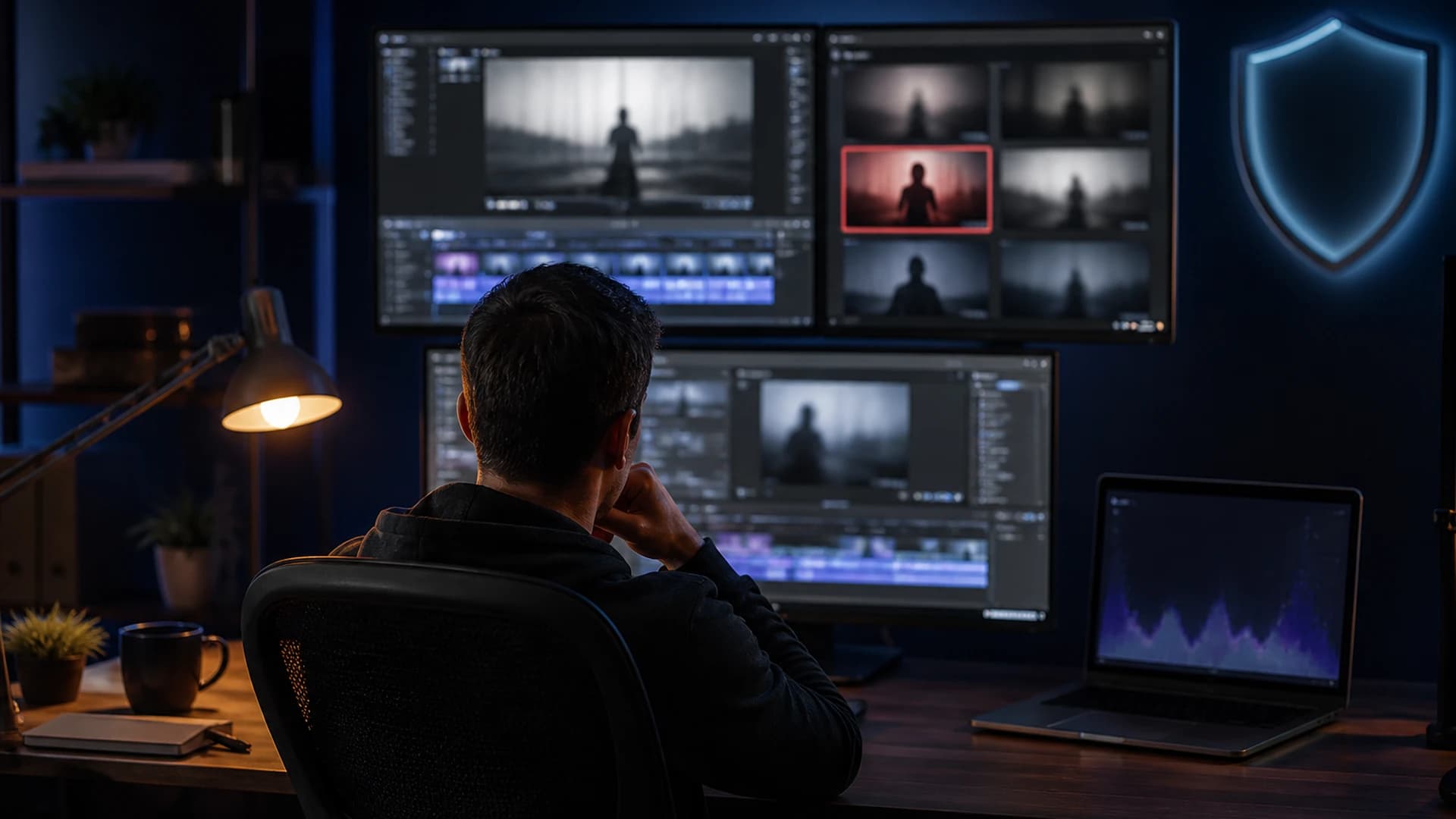
AI-assisted similarity detection changes the detection window considerably. Rather than waiting for a symptom to appear in your analytics, tools like GuardMyVideos scan YouTube for candidate copies and evaluate them across multiple signals — title phrasing, description structure, tag overlap, transcript language, narration style patterns, and thumbnail imagery — to surface matches that manual search would miss entirely. The ranked results include the specific signal context that triggered the match, so you can make an informed decision about whether a result warrants further action, rather than guessing from a title alone.
A Pattern Observed in Creator Disputes — and What It Reveals
A pattern observed in creator disputes involves tutorial-format channels where a second account begins publishing videos covering identical step-by-step processes, using different on-screen footage but narration that follows the original script almost sentence by sentence. The title is changed, the thumbnail uses different colours, and the description is reworded — but the spoken explanation, the order of steps, and the example phrases are functionally the same. This pattern is specifically designed to pass a casual visual check while retaining the core intellectual labour of the original creator. AI-assisted analysis that includes transcript comparison and narration-style patterns is the most reliable way to surface this kind of repackaging early.
If you identify a channel matching this profile, the appropriate next step is to document the evidence carefully — screenshots, timestamps, and signal comparisons — before deciding whether to file a copyright complaint or seek advice from a legal professional. GuardMyVideos provides AI-assisted analysis to help you build that evidence picture; it is not legal advice, and any enforcement decision should be made with appropriate guidance. For creators who want to run ongoing scans rather than one-off checks, Pro access is available — see guardmyvideos.com/pricing for current options.
GuardMyVideos ranks YouTube candidates against videos you choose using multiple similarity signals. Try trial scans free — AI-assisted analysis, not legal advice.