How Copycat Channels Use Playlists and Series Structure to Hide Stolen YouTube Content
Published
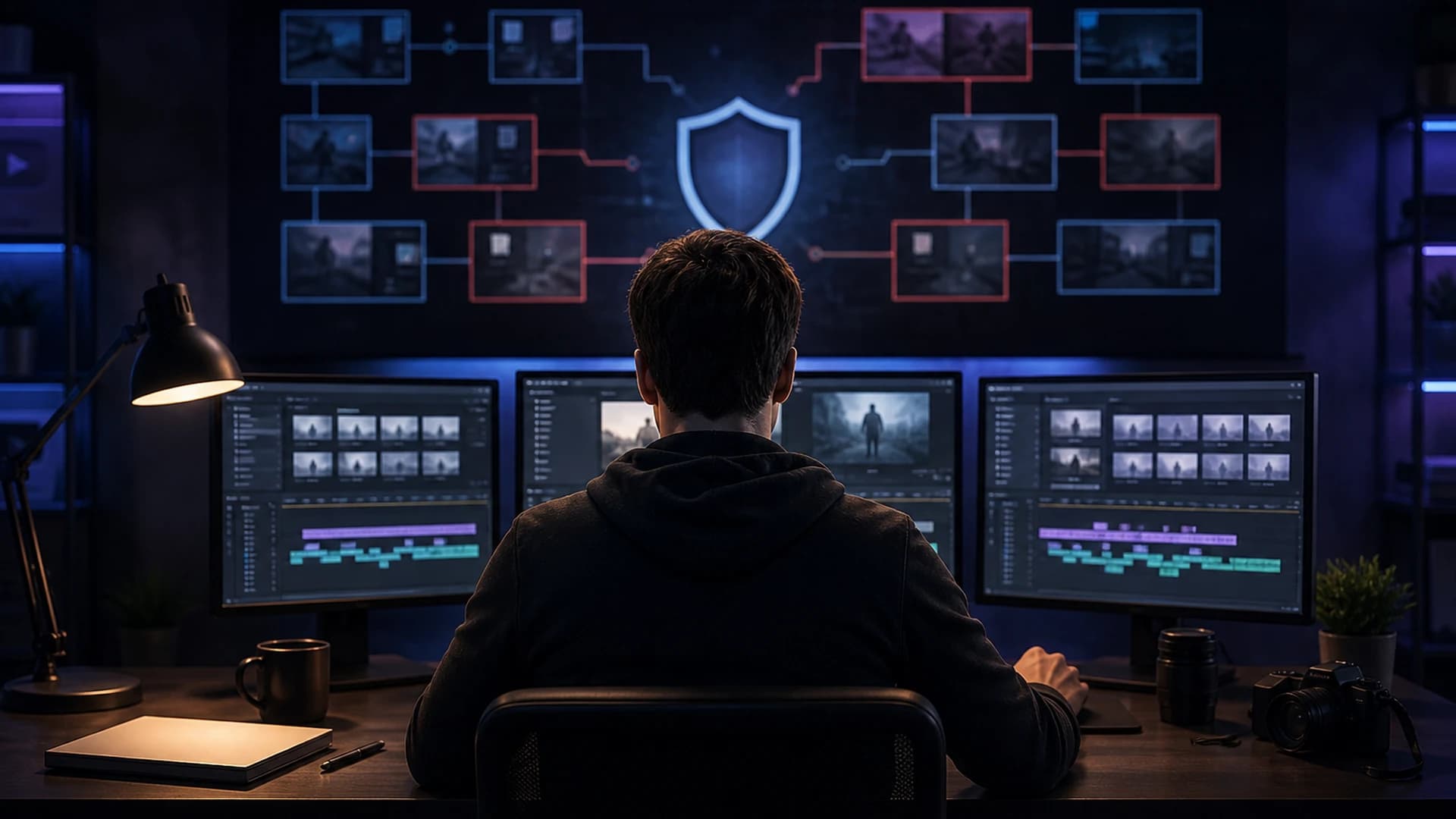
Detecting stolen YouTube content becomes significantly harder when a copycat mirrors not just a single video but the entire structure of a series or playlist. This form of playlist-level YouTube content theft is designed to look like independent work at a glance, yet it systematically reproduces your creative output — episode by episode, format by format. Understanding how this tactic works, and what signals to look for, is one of the most practical steps you can take to protect your channel in 2026.
Why Series Structure Makes YouTube Content Theft Harder to Spot
When a copycat lifts a single video, the duplication is relatively contained and easier to identify. But when they replicate the arc of a series — matching your episode numbering conventions, recurring segment titles, topic sequencing, and even thumbnail style across multiple uploads — the theft becomes diffuse. No single video looks like an obvious copy in isolation, which is precisely the point. Each entry in their playlist provides just enough plausible deniability to survive a casual review.
This structural mimicry extends beyond the visual layer. A copycat series often reproduces the narrative rhythm of your content: the way each episode opens, the order in which concepts are introduced, and the phrasing used in titles and descriptions across the run. When you examine any one upload in isolation, the similarity may appear coincidental. It is only when you look at the pattern across an entire playlist that the systematic nature of the copying becomes clear. This is one area where manual search falls well short — you would need to cross-reference multiple videos across multiple channels simultaneously to see the full picture.
The Signals That Reveal Playlist-Level Copying
Effective detection of series-level YouTube content theft relies on analysing several signals together rather than any single indicator. Title patterns across a playlist can reveal templated copying — the same bracketed labels, episode numbers, or topic keywords appearing in the same order as your own series. Description language often carries even stronger evidence, because copycat creators frequently adapt your descriptions wholesale rather than rewriting them from scratch. Tag clusters are similarly revealing: when a channel's playlist shares an unusual combination of niche tags with yours, episode after episode, that pattern is difficult to explain away as coincidence.
Transcript and narration analysis adds another layer. Even when a copycat re-voices your script or paraphrases it lightly, the underlying structure of argument, the sequence of examples, and distinctive turn-of-phrase patterns tend to persist. AI-assisted comparison across these signals — title, description, tags, transcript, speech-style patterns, and thumbnail imagery — is what makes it possible to surface series-level copying that would be invisible to a text search or a single-video review. GuardMyVideos applies this kind of multi-signal analysis to help creators identify candidate copies, including re-edited or re-voiced uploads, ranked by relevance so you can assess the strongest matches first.
Building a Detection Habit That Keeps Pace With Your Publishing Schedule
A one-off scan is useful for clearing a backlog, but series-level copying is a sustained threat that grows in proportion to how consistently you publish. Each new episode you release is a potential template for the next entry in a copycat's mirrored playlist. This means detection needs to be an ongoing practice rather than a reactive measure — ideally running in step with your own upload cadence so that any emerging pattern of similarity is caught early rather than after a full series has been reproduced.
Connecting your channel via read-only OAuth means GuardMyVideos can perform these recurring scans without requiring access to your account settings or content management. The ranked results include signal context so you can see which combination of indicators triggered each match, making it straightforward to decide whether a result warrants further investigation. New signups receive trial scans to get started, with Pro access available for creators who need ongoing monitoring — see guardmyvideos.com/pricing for current options. As with all findings from AI-assisted analysis, results provide evidence to inform your own judgement and any steps you choose to take; this is AI-assisted analysis, not legal advice.
GuardMyVideos ranks YouTube candidates against videos you choose using multiple similarity signals. Try trial scans free — AI-assisted analysis, not legal advice.