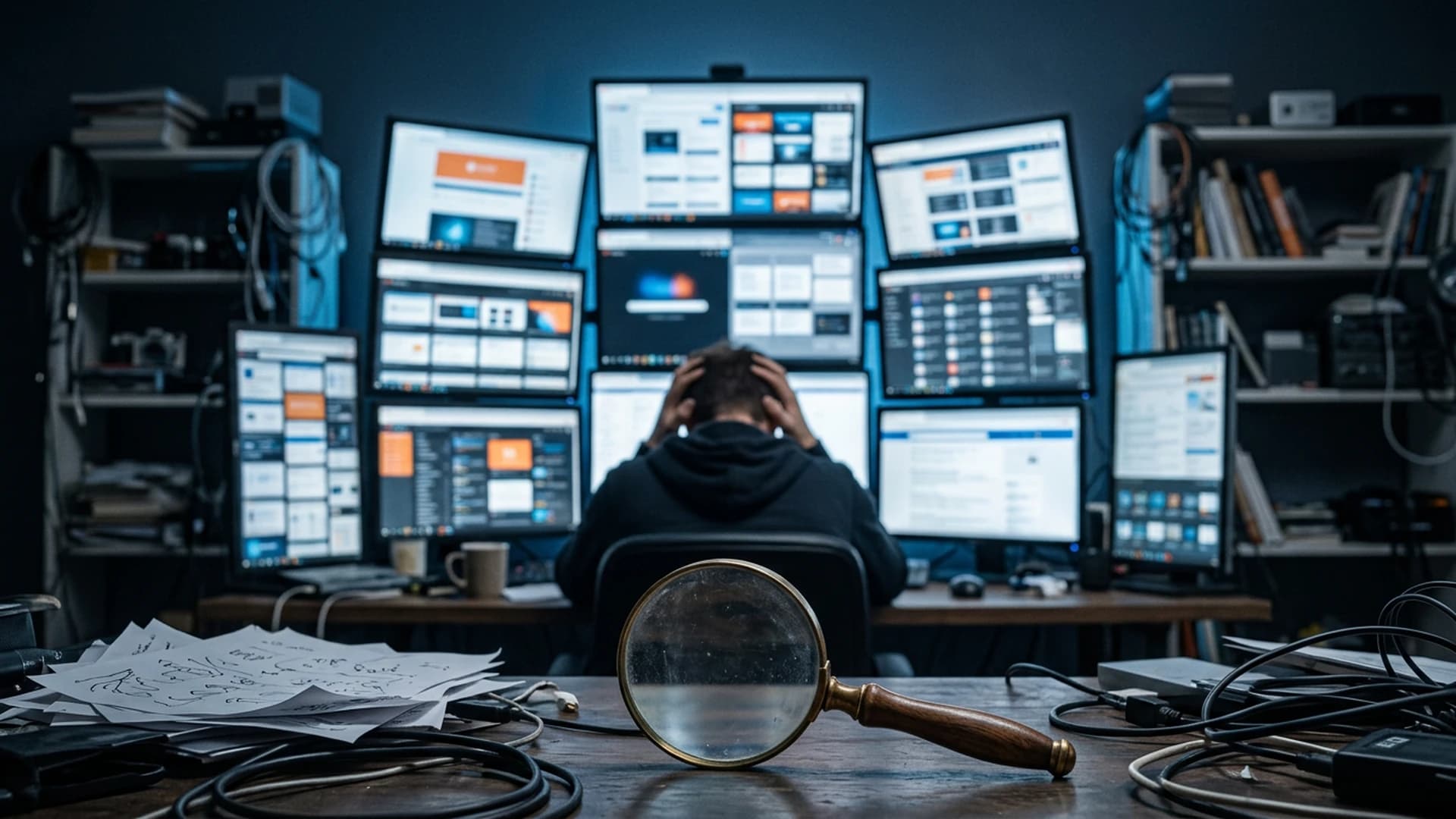
Short answer: Manual YouTube search stops scaling when your catalogue grows or copycats disguise uploads. Keyword guessing misses re-voiced and re-edited copies. Replace sporadic searches with a repeatable multi-signal scan on your highest-value videos.
If you are trying to find copied YouTube videos or other stolen content, manual YouTube search works until it does not. Early on you can search your title once a week; as your library grows — or a viral upload attracts copycats — ad-hoc queries turn into dozens of tabs and hunches. That is where manual search stops scaling.
Manual search vs automated multi-signal scans
| Manual search | Multi-signal scan | |
|---|---|---|
| Time per upload | 30–90 min of ad-hoc queries | Minutes to review a ranked shortlist |
| Copy types caught | Obvious title matches | Re-edits, re-voices, metadata theft |
| Catalogue coverage | Drops as library grows | Repeatable across back catalogue |
| False negatives | High — depends on guesswork | Lower — multi-signal scoring |
| Best when | One suspicious upload, early channel | Growing catalogue or viral videos |
The hidden cost of keyword roulette
Every new upload needs its own search variants: alternate titles, memorable quotes, niche jargon, even common typos thieves introduce. Miss one variant and you miss a copy. The cognitive load does not show up in analytics, but it shows up in creator burnout.
Repeatability beats heroics
A lightweight workflow beats sporadic detective work: pick a video, run a structured discovery pass, review ranked results, document anything suspicious, then move on. Consistency matters more than spending three hours on a single wild-goose chase.
Automation with human judgement
The goal is not to remove humans from the loop — YouTube enforcement and legal questions still need careful decisions. The goal is to shrink the search space: surface plausible reuploads automatically, then apply judgement where it belongs. Start with our reupload discovery guide.
GuardMyVideos automates the discovery and scoring layer for videos you choose. Try trial scans free.
Frequently asked questions
- Why does manual YouTube search fail to find copied videos?
- Copycats change titles, thumbnails, and tags while keeping your script. Manual search only checks the variants you think of — miss one phrase and you miss the copy.
- How many search variants should you try per video?
- At minimum: exact title, quoted script phrases, misspellings, and Google Video results. That is already 10+ queries per upload — and it still misses re-voiced copies.
- What replaces manual search at scale?
- A repeatable scan workflow: pick a video, run multi-signal discovery, review ranked candidates, document matches, move on. Consistency beats heroic one-off searches.