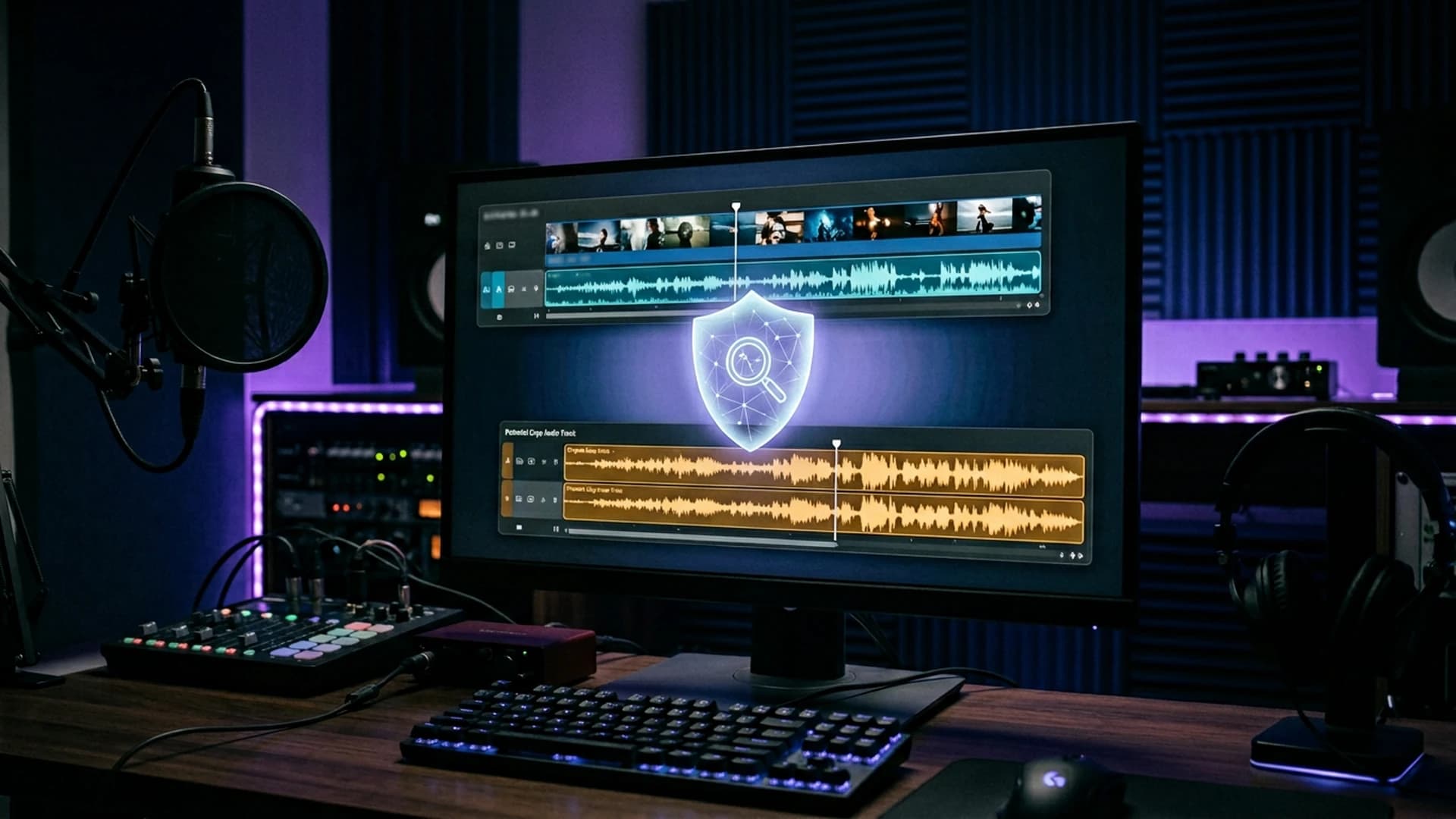
AI-assisted YouTube copyright detection is changing how creators fight back against re-voiced copies of their original content. If you have ever suspected someone ripped your script, hired a different narrator, and reuploaded your video as their own, you already know how difficult those cases are to prove — and how completely manual searching fails to surface them.
Why Re-Voiced Copies Are So Hard to Catch
A straightforward reupload is relatively easy to spot: the title is similar, the thumbnail looks familiar, and a quick search might surface it. Re-voiced copies are a different problem entirely. A copycat can take your script word for word, record it with a new voice, swap the background music, and trim the timestamps — producing a video that looks wholly original to a casual observer and to most basic detection methods.
Manual search on YouTube relies on keywords and titles, neither of which will match once a bad actor makes even superficial changes. Creators who rely solely on periodic YouTube searches or alerts tied to their channel name are, in practice, leaving most re-voiced theft invisible. The effort required to cross-check transcripts, compare narration cadence, and review tags across thousands of candidate videos is simply beyond what any individual creator can do at scale.
Multi-Signal Analysis: Going Beyond the Title Match
GuardMyVideos approaches the problem differently by analysing candidate copies across six distinct signals: title, description, tags, transcript content, narration and speech-style patterns, and thumbnail imagery when available. The narration signal is particularly important for re-voiced cases. Even when a copycat swaps the narrator, the underlying speech rhythm, sentence structure, and phrasing patterns that define your content's style leave traces that AI-assisted comparison can surface — traces that would never appear in a simple title or keyword search. Ranked results are returned with signal context so you can see exactly which signals matched and why a candidate has been flagged.
This kind of layered similarity detection is especially relevant when thieves go to the effort of re-editing footage, adding filler clips, or reordering segments to mask structural similarity. Compared to other copyright detection tools that focus predominantly on visual fingerprinting or audio matching, a transcript- and speech-pattern-aware approach fills a genuine gap for commentary creators, educators, and anyone whose core asset is the script they write, not just the footage they film.
Taking Action: From Detection to Documentation
Identifying a suspicious upload is the first step; building a clear record of the similarity is what makes any takedown request credible. GuardMyVideos provides AI-assisted analysis results — not legal advice — that help you understand and articulate the nature of the match before you decide how to proceed. Whether you choose to file a copyright notification directly with YouTube or consult a legal professional, having documented signal evidence puts you in a considerably stronger position than a gut feeling and a screenshot.
Creators can sign in with Google to grant read-only access so their own content is never altered or accessed beyond what is needed for comparison. New signups receive trial scans to see the tool in action, and Pro plans support the kind of ongoing monitoring that catches copies as they appear rather than months later. For full details on what is included at each tier, visit guardmyvideos.com/pricing.
GuardMyVideos ranks YouTube candidates against videos you choose using multiple similarity signals. Try trial scans free — AI-assisted analysis, not legal advice.